_edited.jpg)
Fashion As Armor: Communicating Through Clothing
- Lola LaChapelle
- May 15
- 3 min read
Fashion is a form of language. It is a form of expression. It has always fascinated me because whether people realize it or not, fashion functions as a symbol of who someone is in a particular moment, or who they are trying to become, embody, or present themselves as. The way people dress communicates things constantly. Confidence, restraint, rebellion, softness, distance, professionalism, effort, vulnerability, even the desire to disappear. None of that is inherently fake or wrong. I think it is completely human. These choices are made for a reason, consciously or subconsciously, and they become part of the way people explain themselves to the world without speaking.
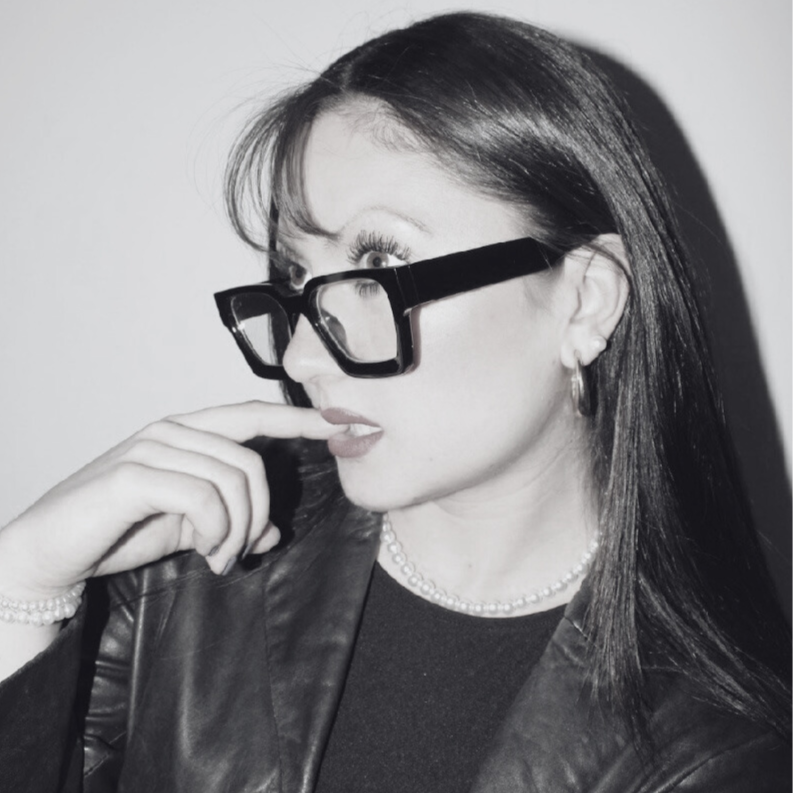
That idea became the foundation for Fashion as Armor. I wanted to explore the relationship between fashion, performance, identity, and emotional protection using only the clothing already in my closet. I was interested in how drastically perception could change depending on styling, posture, body language, and silhouette alone. The project was built around six different visual and emotional archetypes: editorial, masculine, playful, feminine, raw, and disappearance. Each one represented a different form of self-presentation and a different way of moving through the world.
The process itself ended up becoming deeply connected to the concept. Every image was entirely self-directed. I styled the looks, set up the camera and lighting, pressed the shutter, ran into frame, posed, walked back, adjusted, and repeated the process over and over again for hours. A lot of it was awkward, physical, experimental, exhausting, and strangely emotional. Because I was alone, every decision became intentional. I was not only thinking about the clothing itself, but about how the body changes around clothing and how posing can completely shift the meaning of an outfit.
The editorial look was centered around restraint, shape, and visual tension. I wanted it to feel high fashion and intentionally unrealistic, something that would only really make sense inside a studio or on a runway rather than in everyday life. The clothing was close to the body and visually minimal, so shape became extremely important. I exaggerated the posing to create strange silhouettes and geometry that made the body itself feel sculptural. The goal was not realism or wearability. It was image construction.
The masculine look focused on physical presence and taking up space. I intentionally manspreaded, held direct eye contact, and leaned into a more confrontational physicality. The posing became controlled but dominant. I wanted the body language to communicate confidence through space and posture rather than softness or approachability.
Playful became the opposite of restraint. That section was about movement, excess, exaggeration, and expression. I jumped in the air, moved erratically, experimented with strange poses, and leaned fully into maximalism. The styling already felt loud and expressive, so the posing reflected that same energy. I wanted it to feel almost chaotic in a way that still worked visually. There is something freeing about allowing yourself to overdo things and not constantly worry about looking perfectly composed.
The feminine look explored a softer and much more socially controlled version of presentation. I was thinking about a kind of idealized femininity that prioritizes gracefulness, politeness, beauty, and composure. Something almost reminiscent of 1950s femininity and the pressure to remain soft, likable, restrained, and visually pleasing at all times. The posing reflected that through controlled posture, softer gestures, and expressions that felt intentionally composed rather than fully relaxed.
Raw was meant to strip everything back down. The clothing became simple, familiar, and intentionally average. I wanted that section to feel less performative and less costumed than the others. The posing became minimal as well. I mostly stood still, kept my hands in my pockets, and removed as much exaggeration as possible. The point was to create contrast and show what remains when the construction is reduced.
Disappearance became the most emotionally specific category for me. It was inspired by the feeling of not wanting to be perceived at all. The instinct to hide inside clothing, avoid attention, and physically withdraw from visibility. For me, that feeling translates into oversized hoodies and sweatpants. I intentionally hid the shape of my body, curled into myself, and allowed the clothing to consume the figure almost entirely. I wanted it to feel like the person disappears and only the clothing remains. At that point, fashion stops functioning as expression and starts functioning as protection.
The more this project developed, the more I realized how deeply fashion affects behavior, perception, and identity. Clothing is often dismissed as superficial, but I think it reveals a great deal about how people want to exist within the world and how they want to be understood by others. Fashion as Armor became my way of exploring the tension between authenticity, presentation, performance, protection, and perception through something as universal and emotionally charged as clothing.


Comments